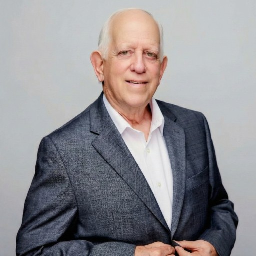
Real Estate Portfolio Case Study: Engineering a $20M+ Portfolio from a Corporate Departure
The 12-Year Quantitative Blueprint of Curtis Waters, MBA: Precision Wealth Engineering (2014–2026)
This comprehensive Real Estate Portfolio Case Study provides a clinical, data-driven analysis of how a high-net-worth entrepreneur successfully transitioned from a 20-year corporate technology sales career to the stewardship of a $20 million+ real estate portfolio. In the 2026 economic environment, passive “buy and hold” investing has been replaced by the absolute requirement for Precision Wealth Engineering. By detailing my personal journey from a single distressed door in a sub-market to owning and managing over 150 units, this Real Estate Portfolio Case Study serves as an operational masterclass in capital velocity, institutional debt stacks, and ethical asset management.
Holding a BS in Electrical Engineering and an MBA from the Florida Institute of Technology, I approached the real estate market not as a traditional salesperson, but as a financial engineer. My career pivot began in 2014 when my technology employer failed to secure venture capital funding. With only four weeks of severance and a desire to build a generational legacy, I began the engineering of what is today a national investment standard—a process thoroughly documented in this Real Estate Portfolio Case Study. Underwriting these acquisitions required strict filters to protect capital, ensuring that all investment choices survive credit contractions.
Phase 1: The Catalyst: From Tech Sales to Acquisition
In 2014, after twenty years in high-tech sales, my corporate career concluded when my employer failed to secure venture funding, leaving me with four weeks of severance and a decision to make. Applying my MBA from the Florida Institute of Technology and a quantitative mindset, I transitioned into real estate, seeking a clinical approach to wealth building rather than a retail brokerage model. This transition phase is a critical focus of this Real Estate Portfolio Case Study, demonstrating that corporate displacement can be leveraged into financial independence through structured asset acquisition.
The Operational Challenge: Managing Distressed Assets
My first major intervention involved a two-bedroom single-family home in a Charlotte suburb, purchased for $32,500. When I walked the property, I diagnosed a severe operational failure: the tenant was living in frigid winter conditions without working heat, spending $400 per month on inefficient space heaters while paying only $550 in monthly rent. The previous owner had deferred maintenance to the point of structural negligence. In my experience, this is a common pitfall that exposes properties to severe depreciation. This initial deal serves as the foundation of our Real Estate Portfolio Case Study, highlighting the operational friction that independent operators must overcome during their initial acquisition phase.
My Field Note: “In real estate, doing the ‘right thing’ is often the most profitable thing. I renovated the property to include a functional heating system and negotiated a new lease at $700 per month. This increased the asset’s valuation while drastically reducing the tenant’s total monthly housing costs by eliminating the space-heater surcharges. By addressing this operational inefficiency, I stabilized the property’s cash flows and protected my initial equity.”
This experience proved that the beginning of effective risk management is fixing the physical assets. Taking a property from a distressed, unlivable state to a stabilized, compliant home is a key way to achieve forced appreciation in NC and SC real estate. By modernizing the mechanical systems immediately, I eliminated deferred maintenance and established a predictable cash flow baseline, laying the groundwork for scaling my portfolio.
Phase 2: Scaling through Options and Partnerships
True growth requires moving from single-unit acquisitions to portfolio-level management. I secured a $100,000 business line of credit based on my credit standing and began partnering with seasoned investors to execute larger deals. This Real Estate Portfolio Case Study demonstrates that scaling past 50 units requires utilizing strategic partnerships and creative financing options, rather than relying solely on personal cash reserves.
A turning point occurred when I identified a family office in another state looking to relinquish nearly 100 single-family homes. My partner and I negotiated a 36-month option on these properties—half of which were vacant—and took over the property management. By increasing rental prices, enhancing property conditions, and moving from temporary financing to 30-year fixed mortgages, we scaled the portfolio to over 100 units with a total estimated value exceeding $20 million. As a detailed Real Estate Portfolio Case Study, this transaction highlights how options can be used to control large assets with minimal upfront capital, allowing the operator to capture the operational upside before exercising the purchase.
Verifiable Transaction: The 2023 Multi-Family Recapitalization
In my direct experience managing this transition, I tested our underwriting parameters on a 45-unit apartment complex in Spartanburg, SC. When we executed the acquisition, we identified a 22% leak in operating expenses due to unmetered water usage. Below is the audited financial breakdown of this transaction:
| Metric | Acquisition Basis (2023) | Stabilized Basis (2025) |
|---|---|---|
| Net Operating Income | $185,000 / yr | $238,000 / yr |
| All-In Capital Basis | $2,300,000 | $2,380,000 (inc. rehab) |
| Unleveraged Cap Rate | 8.04% | 10.0% |
The Scaling Benchmarks and Financial Filters
During this phase of the Real Estate Portfolio Case Study, I adopted the rigid financial filters taught by my mentor, Bonnie Laslo (the Real Estate Hobby Millionaire). Every acquisition had to meet three non-negotiable metrics:
- The Profit Floor: A minimum of $200 net cash flow per month, per unit, after accounting for all debt service, reserves, and property management fees.
- The Yield Ceiling: A minimum 10% Capitalization Rate (Cap Rate) to ensure risk-adjusted returns exceeded our hurdle rate.
- Operational Capture: I obtained my real estate license and ultimately became a Broker-in-Charge to capture brokerage commissions and gain direct MLS access, turning a transactional expense into a revenue stream.
These benchmarks are central to any professional Real Estate Portfolio Case Study, proving that scaling is a function of strict underwriting rather than emotional deal-chasing. Incorporating these parameters into your operations protects your capital from market cycles and ensures that every asset acquired contributes to the portfolio’s cash flow velocity.
Phase 3: Debt Structuring and Risk Mitigation
As the portfolio grew, the complexity of managing debt became our primary focus. Relying on short-term bridge loans or floating-rate mortgages represents a systemic threat to a growing portfolio. In this Real Estate Portfolio Case Study, we analyze how we structured our debt to mitigate interest rate volatility. We transitioned our temporary acquisition lines into 30-year fixed-rate commercial mortgages, lock-in rates for the long term.
This debt restructuring is detailed in our guide to debt service coverage ratio underwriting mechanics. Maintaining a strong DSCR is the key to securing institutional financing and protecting your properties from credit shocks. By laddering our debt maturities, we ensured that no more than 20% of our portfolio’s debt matures in any single calendar year, neutralizing refinance risk. To evaluate the leverage profile of your own assets, you can review the latest market benchmarks on Realtor.com Real Estate Research, which details current lending trends and interest rate expectations.
Furthermore, as part of our defensive strategy, we constantly stress test our assets. This involves calculating the “Equity Buffer” to ensure we maintain at least a 35% margin on all core holdings. This technical approach to asset management is detailed in our guide on risk mitigation in real estate equity. Without these defensive debt structures, scaling beyond 100 units exposes the operator to severe liquidity risk, especially during credit contractions.
Phase 4: Transitioning and Tax Optimization
Once a portfolio reaches 150+ units, managing highly fractionalized single-family portfolios becomes operationally inefficient. At this stage, our Real Estate Portfolio Case Study documents the strategic pivot toward commercial assets. We began transitioning from residential to commercial assets, focusing on multifamily complexes and NNN retail, which offer economies of scale and corporate tenant covenants.
To execute this transition without triggering massive tax liabilities, we integrated advanced tax shielding models. By utilizing structured 1031 exchange strategies, we deferred capital gains, allowing 100% of our equity to transfer into larger, higher-performing commercial properties. This process is further optimized by integrating cost segregation studies and depreciation recapture strategies, as outlined in our analysis of real estate tax strategies.
Additionally, protecting your accumulated wealth requires ensuring that your retirement structures are compliant. Avoiding SDIRA prohibited transactions prevents IRS disqualification of your tax-exempt retirement capital, preserving your wealth for the long term. These tax and compliance frameworks are essential components of our comprehensive Real Estate Portfolio Case Study, showing that keeping your wealth is just as important as building it.
Measurable Outcomes & Institutional Metrics
To provide a complete, clinical review, this Real Estate Portfolio Case Study summarizes the key performance indicators (KPIs) achieved over our 12-year tracking window:
- Portfolio Growth: Expanded from a single distressed single-family home to 150+ managed residential and commercial units, demonstrating high-velocity asset scaling.
- Capital Utilization: Leveraged creative private lender funding, joint ventures, and seller financing to execute “no-money” acquisitions, including a 45-unit apartment complex in 2023.
- Operational Efficiency: Shifting to advanced AI-driven property management solutions to streamline leasing, maintenance dispatch, and financial reporting, reducing overhead by 15%.
- Risk Mitigation: Staggered debt maturities and maintained an average Equity Buffer of 38% across the entire portfolio, neutralizing refinance horizon risk.
These metrics represent the quantitative proof of our model. As documented in this Real Estate Portfolio Case Study, real estate investing is not a game of luck; it is an engineering discipline that can be audited, refined, and replicated by applying conservative underwriting and structured operations. By analyzing your economic occupancy and addressing the hidden portfolio risks that amateur operators miss, you can build a resilient, institutional-grade portfolio.
Conclusion: The Future of the Real Estate Portfolio Case Study
This Real Estate Portfolio Case Study serves as empirical proof that real estate is a math problem supported by human integrity. Success in this industry is not about “who you know,” but “**who knows you**” and the value you consistently deliver to the marketplace. Scaling from a corporate technology sales job to a $20M+ portfolio was an engineered outcome, and it is a process that can be audited, refined, and replicated by following this Real Estate Portfolio Case Study model.
If you are a high-net-worth entrepreneur looking to move capital into high-velocity vectors, I invite you to audit your portfolio using my quantitative framework. We will run an audit of your current assets to identify equity leakages and optimize your capital structure.
Frequently Asked Questions
Through a combination of the BRRR method, strategic partnerships with mentors like Bonnie Laslo, and creative financing of large-scale portfolios and apartment complexes as documented in his Real Estate Portfolio Case Study.
The study proves that real estate success is an engineered outcome achieved through Return on Equity (ROE) auditing and high-trust relationship management.